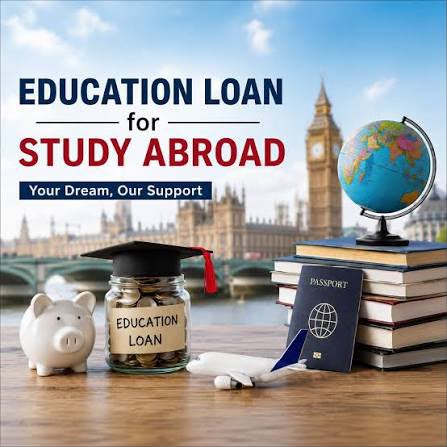
A single year at a foreign university can cost anywhere from 20 to 50 lakhs depending on the country and institution — which is why most Indian students financing their international education rely on an education loan rather than savings alone. The good news: financing options have expanded significantly, from public sector banks to NBFCs to a new government-backed scheme designed to make loans more accessible. Here’s what you actually need to know before you apply.
Secured vs Unsecured Education Loans
This is the first decision every applicant faces.
Secured loans require collateral — property, fixed deposits, or other assets — pledged against the loan. Because the lender’s risk is lower, interest rates are lower too, typically starting around 8.5–10%. Banks usually finance 80–85% of the pledged asset’s value, making secured loans the better option if you need a larger loan amount at a lower rate.
Unsecured loans need no collateral but lean heavily on your academic profile, the university’s ranking, and your co-applicant’s financial strength. Interest rates run roughly 1.5–4% higher than secured loans, typically 10.5–13.5%, sometimes higher depending on the lender. Approval is stricter and a co-applicant is usually mandatory.
Typical Interest Rates by Lender (2026)
Lender Type
Approx. Interest Rate
Notes
SBI (Global Ed-Vantage, secured)
~8.4% – 8.9%
Popular first choice among public banks
ICICI Bank (secured)
From 9.00%
Rates from 9.00%–13.00%, average ~10.54%
ICICI Bank (unsecured)
From 10.25%
For abroad studies without collateral
Credila Financial Services
From ~10.5%
Private bank, faster processing
NBFCs (Propelld, Avanse, InCred, etc.)
10.5% – 13.5%
No collateral, faster approval, higher rates
International lenders (Prodigy Finance)
From ~9.66% APR (USD)
No Indian collateral or co-applicant needed
Rates vary by applicant profile, university ranking, and co-applicant income — always get a personalised quote rather than relying on advertised starting rates.
Eligibility Criteria
Indian citizen, generally aged 18–35
At least 50% marks in your most recent qualifying exam
Confirmed admission to a recognised foreign university
A co-applicant (usually a parent) with a stable income, especially for unsecured loans
A good CIBIL score (700+) improves approval odds and interest rate significantly
What an Education Loan Typically Covers
Tuition fees
Accommodation and living expenses
Travel costs
Health insurance
Books, laptop, and other study essentials
In some cases, exam and visa fees
Government Schemes Worth Knowing About
PM Vidyalakshmi Scheme: A central government initiative offering collateral-free, guarantor-free education loans to students admitted into recognised institutions — the scheme also applies to select study-abroad pathways. Students from families earning up to ₹8 lakh a year get a 3% interest subvention during the moratorium period on loans up to ₹10 lakh, and those earning up to ₹4.5 lakh may have their entire interest paid under the PM-USP CSIS component. Apply directly through the official Vidyalakshmi portal — no separate subsidy application is needed if you qualify.
Credit Guarantee Fund Scheme for Education Loans (CGFSEL): Backs loans up to ₹7.5 lakh without collateral, reducing lender risk and making approval easier for eligible students.
Section 80E tax benefit: Interest paid on an education loan (for yourself, your spouse, your children, or a student for whom you’re the legal guardian) is fully deductible from taxable income with no upper cap on the deduction amount.
National Overseas Scholarship (NOS): 100% Funding for SC/ST Students
If you belong to a Scheduled Caste (SC), Scheduled Tribe (ST), Denotified/Nomadic Tribe, or a landless agricultural labourer/traditional artisan family, the National Overseas Scholarship (NOS) is worth exploring before you take out a loan at all — it can cover your entire cost of studying abroad rather than just subsidising the interest.
What it covers: Actual tuition fees, a maintenance/living allowance (around USD 15,400 annually for select categories), airfare, visa costs, and other approved allowances — effectively a fully funded Master’s or PhD abroad, subject to the scheme’s terms and limits.
Who administers it: SC, DNT, semi-nomadic tribe, landless agricultural labourer, and traditional artisan applicants apply through the Ministry of Social Justice and Empowerment; ST applicants apply through a separate portal run by the Ministry of Tribal Affairs.
Eligibility at a glance:
Valid caste certificate confirming SC/ST/DNT/eligible category status
Minimum 60% marks (or equivalent) in your qualifying degree
Admission secured at a recognised foreign university — top 500 globally for Ministry of Social Justice applicants, top 1000 for Ministry of Tribal Affairs applicants
Age below 35 for Master’s applicants, below 40 for PhD applicants (as of 1 April of the selection year)
Annual family income within ₹8 lakh (Ministry of Social Justice category) or ₹6 lakh (Scheduled Tribe category)
For Master’s/PhD study only — not applicable to undergraduate programmes
How Competitive Is It?
Roughly 125 scholarships are awarded each year across all categories, with the SC category receiving the largest share (around 115 of these). It’s genuinely competitive, but the payoff is substantial — full funding rather than a loan you’ll be repaying for years.
Real Outcomes
We’ve had students from our own network secure NOS funding for their Master’s in the UK, covering tuition and living costs in full. It’s a route we actively screen every eligible student for before defaulting to a loan conversation.
Application Window
Typically opens in April and runs through June for the relevant selection year, with a short correction window afterward — dates shift slightly each year, so check the official NOS portal closer to your intake.
Recent News and Updates
PM Vidyalakshmi Scheme continues its rollout in 2026, with an approved budget of ₹3,600 crore through FY 2030–31, covering over 2.2 million meritorious students across roughly 860 qualifying institutions.
Interest subvention processing timelines have shifted: for FY 2025–26, the subsidy disbursal process only begins after 31 March 2026, so students shouldn’t expect the 3% subvention credited immediately after loan disbursement.
The subsidy pool is capped — a maximum of 1 lakh students receive the interest subvention benefit each year, with priority given to students at government institutions and those in technical/professional courses, so applying early in the cycle matters.
ICICI Bank’s Q1 2026 rate data shows average education loan rates around 10.54% per annum, with the bank’s cheapest unsecured abroad-study rate at 10.25%.
International lenders remain a strong alternative for students without a strong co-applicant, with Prodigy Finance-style lenders assessing future earning potential rather than requiring Indian collateral.
How to Improve Your Loan Terms
Apply to a QS top-100/top-50 university where possible — several lenders offer preferential rates for higher-ranked institutions
Strengthen your co-applicant’s financial profile before applying
Offer collateral if available, to unlock the lower secured-loan rate bracket
Compare at least 3–4 lenders (a mix of public banks, private banks, and NBFCs) before committing
Check your eligibility for PM Vidyalakshmi or CGFSEL before assuming you need a private unsecured loan
How WeConnect Overseas Can Help
Choosing the right education loan isn’t just about the lowest advertised rate — it’s about matching the loan type, lender, and government scheme eligibility to your specific profile and destination country. Through our partnerships with HDFC, Axis Bank, Auxilo, Avanse, InCred, Leap Finance, and Credence, we help you:
Compare secured vs unsecured options based on your family’s financial profile
Check eligibility for PM Vidyalakshmi and other subsidy schemes
Prepare and file loan documentation alongside your university and visa applications
Get faster loan sanctioning timed to your visa deadline
What is the interest rate for a study abroad education loan in India?
Rates generally range from 8.5% to 14% per annum, depending on whether the loan is secured or unsecured, the lender, and your academic and financial profile.
Can I get a study abroad loan without collateral?
Yes. Unsecured loans are available through banks and NBFCs, though they carry higher interest rates and usually require a financially strong co-applicant.
How much loan amount can I get for studying abroad?
Loan amounts typically range from ₹4 lakh to ₹1.5 crore, depending on the lender, collateral offered, and the university and course you’re admitted to.
Is there a government scheme for education loans to study abroad?
Yes. The PM Vidyalakshmi Scheme offers collateral-free loans with interest subvention for eligible students, alongside the Credit Guarantee Fund Scheme for Education Loans (CGFSEL) for loans up to ₹7.5 lakh.
Can I claim tax benefits on my education loan?
Yes, under Section 80E of the Income Tax Act, the interest paid on an education loan is fully deductible from taxable income, with no upper limit.
Begin Your Study Abroad Journey with WeConnect Overseas
Planning to finance your study abroad education with an education loan?
Book a FREE counselling session with WeConnect Overseas and get personalised guidance on education loans, university selection, scholarships, government schemes, eligibility, and student visa requirements.
Start planning your study abroad journey today and find the right financing option for your international education.
Expertise:
Study Abroad Counselling • University Admissions • Student Visa Guidance • Scholarships • Education Loans • Test Preparation
How We Think About Studying Abroad
“Studying abroad is more than securing admission to an international university. It is about choosing the right course, country and career path to build a successful future.”
WeConnect Overseas is a study abroad consultancy helping students navigate every stage of their international education journey. Since 2020, our team has provided personalised guidance to students seeking higher education opportunities at universities across the UK, USA, Ireland, Australia, Canada, Germany and other global study destinations.
Our expertise covers profile evaluation, course and university selection, admission applications, scholarships, education loans, student visa guidance, test preparation, accommodation and pre-departure support.
WeConnect Overseas has counselled 10,000+ students with a 99% visa success rate, helped secure ₹200 Cr+ in education loans and ₹2 Cr+ in scholarships.
Every article published by our team is created and reviewed with the goal of providing students and parents with accurate, practical and up-to-date information for making informed study abroad decisions.
Author Information
Author
WeConnect Overseas
Specialisation
Overseas Education & Study Abroad Guidance
Established
2020
Location
Thane, Maharashtra, India
Topics Covered
Study Abroad, University Admissions, Scholarships, Education Loans, Student Visas, IELTS & Entrance Exams, MBBS Abroad
Written & Reviewed by
WeConnect Overseas | Study Abroad & Overseas Education Experts
A single year at a foreign university can cost anywhere from 20 to 50 lakhs depending on the country and institution — which is why most Indian students financing their international education rely on an education loan rather than savings alone. The good news: financing options have expanded significantly, from public sector banks to NBFCs to a new government-backed scheme designed to make loans more accessible. Here's what you actually need to know before you apply.
Secured vs Unsecured Education Loans
This is the first decision every applicant faces.
Secured loans require collateral — property, fixed deposits, or other assets — pledged against the loan. Because the lender's risk is lower, interest rates are lower too, typically starting around 8.5–10%. Banks usually finance 80–85% of the pledged asset's value, making secured loans the better option if you need a larger loan amount at a lower rate.
Unsecured loans need no collateral but lean heavily on your academic profile, the university's ranking, and your co-applicant's financial strength. Interest rates run roughly 1.5–4% higher than secured loans, typically 10.5–13.5%, sometimes higher depending on the lender. Approval is stricter and a co-applicant is usually mandatory.
Typical Interest Rates by Lender (2026)
Lender Type
Approx. Interest Rate
Notes
SBI (Global Ed-Vantage, secured)
~8.4% – 8.9%
Popular first choice among public banks
ICICI Bank (secured)
From 9.00%
Rates from 9.00%–13.00%, average ~10.54%
ICICI Bank (unsecured)
From 10.25%
For abroad studies without collateral
Credila Financial Services
From ~10.5%
Private bank, faster processing
NBFCs (Propelld, Avanse, InCred, etc.)
10.5% – 13.5%
No collateral, faster approval, higher rates
International lenders (Prodigy Finance)
From ~9.66% APR (USD)
No Indian collateral or co-applicant needed
Rates vary by applicant profile, university ranking, and co-applicant income — always get a personalised quote rather than relying on advertised starting rates.
Eligibility Criteria
Indian citizen, generally aged 18–35
At least 50% marks in your most recent qualifying exam
Confirmed admission to a recognised foreign university
A co-applicant (usually a parent) with a stable income, especially for unsecured loans
A good CIBIL score (700+) improves approval odds and interest rate significantly
What an Education Loan Typically Covers
Tuition fees
Accommodation and living expenses
Travel costs
Health insurance
Books, laptop, and other study essentials
In some cases, exam and visa fees
Government Schemes Worth Knowing About
PM Vidyalakshmi Scheme: A central government initiative offering collateral-free, guarantor-free education loans to students admitted into recognised institutions — the scheme also applies to select study-abroad pathways. Students from families earning up to ₹8 lakh a year get a 3% interest subvention during the moratorium period on loans up to ₹10 lakh, and those earning up to ₹4.5 lakh may have their entire interest paid under the PM-USP CSIS component. Apply directly through the official Vidyalakshmi portal — no separate subsidy application is needed if you qualify.
Credit Guarantee Fund Scheme for Education Loans (CGFSEL): Backs loans up to ₹7.5 lakh without collateral, reducing lender risk and making approval easier for eligible students.
Section 80E tax benefit: Interest paid on an education loan (for yourself, your spouse, your children, or a student for whom you're the legal guardian) is fully deductible from taxable income with no upper cap on the deduction amount.
National Overseas Scholarship (NOS): 100% Funding for SC/ST Students
If you belong to a Scheduled Caste (SC), Scheduled Tribe (ST), Denotified/Nomadic Tribe, or a landless agricultural labourer/traditional artisan family, the National Overseas Scholarship (NOS) is worth exploring before you take out a loan at all — it can cover your entire cost of studying abroad rather than just subsidising the interest.
What it covers: Actual tuition fees, a maintenance/living allowance (around USD 15,400 annually for select categories), airfare, visa costs, and other approved allowances — effectively a fully funded Master's or PhD abroad, subject to the scheme's terms and limits.
Who administers it: SC, DNT, semi-nomadic tribe, landless agricultural labourer, and traditional artisan applicants apply through the Ministry of Social Justice and Empowerment; ST applicants apply through a separate portal run by the Ministry of Tribal Affairs.
Eligibility at a glance:
Valid caste certificate confirming SC/ST/DNT/eligible category status
Minimum 60% marks (or equivalent) in your qualifying degree
Admission secured at a recognised foreign university — top 500 globally for Ministry of Social Justice applicants, top 1000 for Ministry of Tribal Affairs applicants
Age below 35 for Master's applicants, below 40 for PhD applicants (as of 1 April of the selection year)
Annual family income within ₹8 lakh (Ministry of Social Justice category) or ₹6 lakh (Scheduled Tribe category)
For Master's/PhD study only — not applicable to undergraduate programmes
How Competitive Is It?
Roughly 125 scholarships are awarded each year across all categories, with the SC category receiving the largest share (around 115 of these). It's genuinely competitive, but the payoff is substantial — full funding rather than a loan you'll be repaying for years.
Real Outcomes
We've had students from our own network secure NOS funding for their Master's in the UK, covering tuition and living costs in full. It's a route we actively screen every eligible student for before defaulting to a loan conversation.
Application Window
Typically opens in April and runs through June for the relevant selection year, with a short correction window afterward — dates shift slightly each year, so check the official NOS portal closer to your intake.
Recent News and Updates
PM Vidyalakshmi Scheme continues its rollout in 2026, with an approved budget of ₹3,600 crore through FY 2030–31, covering over 2.2 million meritorious students across roughly 860 qualifying institutions.
Interest subvention processing timelines have shifted: for FY 2025–26, the subsidy disbursal process only begins after 31 March 2026, so students shouldn't expect the 3% subvention credited immediately after loan disbursement.
The subsidy pool is capped — a maximum of 1 lakh students receive the interest subvention benefit each year, with priority given to students at government institutions and those in technical/professional courses, so applying early in the cycle matters.
ICICI Bank's Q1 2026 rate data shows average education loan rates around 10.54% per annum, with the bank's cheapest unsecured abroad-study rate at 10.25%.
International lenders remain a strong alternative for students without a strong co-applicant, with Prodigy Finance-style lenders assessing future earning potential rather than requiring Indian collateral.
How to Improve Your Loan Terms
Apply to a QS top-100/top-50 university where possible — several lenders offer preferential rates for higher-ranked institutions
Strengthen your co-applicant's financial profile before applying
Offer collateral if available, to unlock the lower secured-loan rate bracket
Compare at least 3–4 lenders (a mix of public banks, private banks, and NBFCs) before committing
Check your eligibility for PM Vidyalakshmi or CGFSEL before assuming you need a private unsecured loan
How WeConnect Overseas Can Help
Choosing the right education loan isn't just about the lowest advertised rate — it's about matching the loan type, lender, and government scheme eligibility to your specific profile and destination country. Through our partnerships with HDFC, Axis Bank, Auxilo, Avanse, InCred, Leap Finance, and Credence, we help you:
Compare secured vs unsecured options based on your family's financial profile
Check eligibility for PM Vidyalakshmi and other subsidy schemes
Prepare and file loan documentation alongside your university and visa applications
Get faster loan sanctioning timed to your visa deadline
What is the interest rate for a study abroad education loan in India?
Rates generally range from 8.5% to 14% per annum, depending on whether the loan is secured or unsecured, the lender, and your academic and financial profile.
Can I get a study abroad loan without collateral?
Yes. Unsecured loans are available through banks and NBFCs, though they carry higher interest rates and usually require a financially strong co-applicant.
How much loan amount can I get for studying abroad?
Loan amounts typically range from ₹4 lakh to ₹1.5 crore, depending on the lender, collateral offered, and the university and course you're admitted to.
Is there a government scheme for education loans to study abroad?
Yes. The PM Vidyalakshmi Scheme offers collateral-free loans with interest subvention for eligible students, alongside the Credit Guarantee Fund Scheme for Education Loans (CGFSEL) for loans up to ₹7.5 lakh.
Can I claim tax benefits on my education loan?
Yes, under Section 80E of the Income Tax Act, the interest paid on an education loan is fully deductible from taxable income, with no upper limit.
Begin Your Study Abroad Journey with WeConnect Overseas
Planning to finance your study abroad education with an education loan?
Book a FREE counselling session with WeConnect Overseas and get personalised guidance on education loans, university selection, scholarships, government schemes, eligibility, and student visa requirements.
Start planning your study abroad journey today and find the right financing option for your international education.
Expertise:
Study Abroad Counselling • University Admissions • Student Visa Guidance • Scholarships • Education Loans • Test Preparation
How We Think About Studying Abroad
“Studying abroad is more than securing admission to an international university. It is about choosing the right course, country and career path to build a successful future.”
WeConnect Overseas is a study abroad consultancy helping students navigate every stage of their international education journey. Since 2020, our team has provided personalised guidance to students seeking higher education opportunities at universities across the UK, USA, Ireland, Australia, Canada, Germany and other global study destinations.
Our expertise covers profile evaluation, course and university selection, admission applications, scholarships, education loans, student visa guidance, test preparation, accommodation and pre-departure support.
WeConnect Overseas has counselled 10,000+ students with a 99% visa success rate, helped secure ₹200 Cr+ in education loans and ₹2 Cr+ in scholarships.
Every article published by our team is created and reviewed with the goal of providing students and parents with accurate, practical and up-to-date information for making informed study abroad decisions.
Author Information
Author
WeConnect Overseas
Specialisation
Overseas Education & Study Abroad Guidance
Established
2020
Location
Thane, Maharashtra, India
Topics Covered
Study Abroad, University Admissions, Scholarships, Education Loans, Student Visas, IELTS & Entrance Exams, MBBS Abroad
Written & Reviewed by
WeConnect Overseas | Study Abroad & Overseas Education Experts